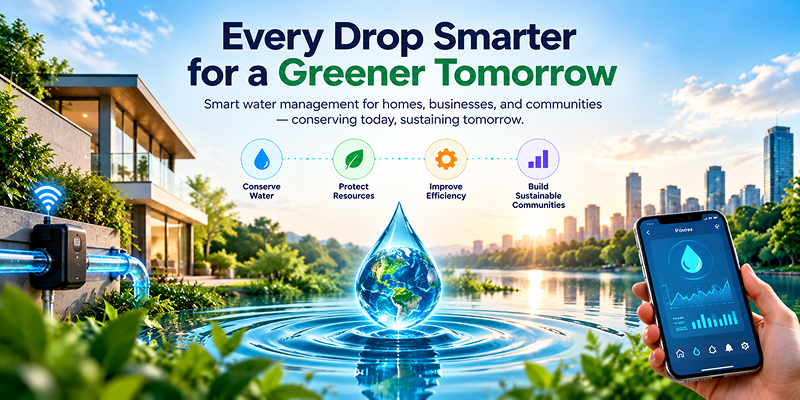
Save up to 30% on Water Bills
 Smart IoT Water Management
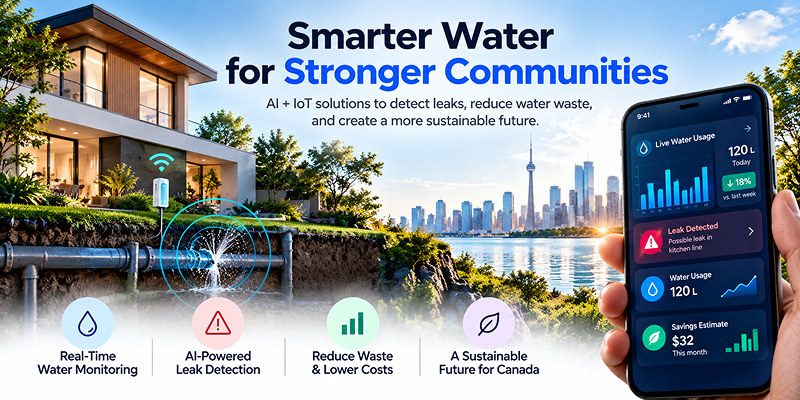
 Real-Time Monitoring & Alerts
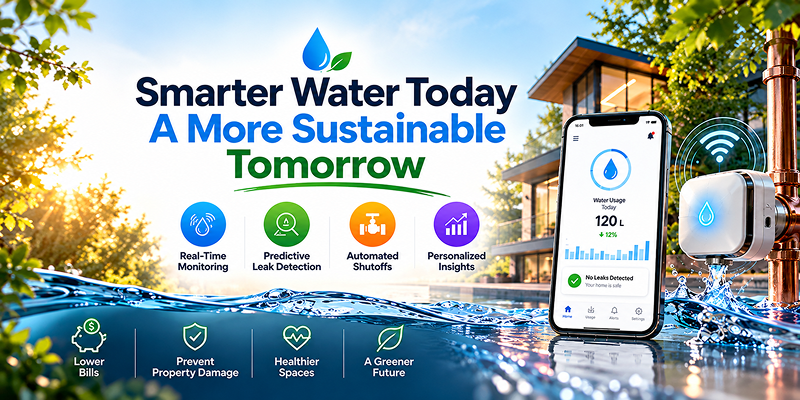
 Prevent Costly Leak Damage
Stop Water Waste - Build a Smarter, Safer Tomorrow


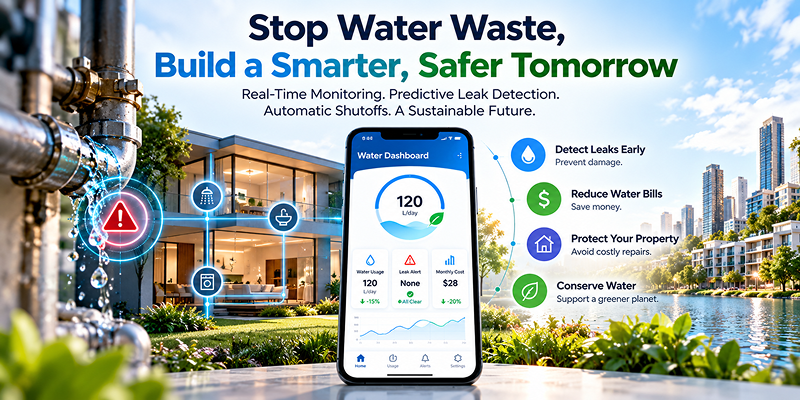
Water is one of our most valuable natural resources, yet significant amounts are wasted every day through undetected leaks, inefficient fixtures, and a lack of real-time monitoring. Beyond increasing water bills, this waste can lead to property damage, unexpected maintenance costs, and unnecessary environmental pressure. Aquanome Inc. is addressing these challenges with an intelligent water management platform powered by artificial intelligence (AI) and Internet of Things (IoT) technology. By connecting water monitoring, predictive leak detection, automated shutoff capabilities, and personalised insights, Aquanome helps homeowners, businesses, and municipalities take a smarter approach to managing water.
Why Smart Water Management Matters
Traditional water management often depends on periodic inspections, manual meter readings, or visible signs of a problem. Unfortunately, a small leak can continue unnoticed until it causes substantial water loss or damage.
Smart water management introduces a more proactive approach. Connected monitoring systems can track water usage, identify unusual patterns, and provide alerts when activity may indicate a potential problem. With better visibility into water consumption, users can investigate issues earlier and make more informed decisions.
For homeowners, this can help reduce avoidable waste and protect property. Businesses can improve oversight of their water systems, while municipalities can explore data-driven approaches to managing water infrastructure.
Real-Time Water Monitoring for Greater Visibility
Understanding how and when water is being used is an important step towards reducing waste. Real-time water monitoring provides timely information about consumption and system activity, helping users identify patterns that may otherwise go unnoticed.
Through connected sensors and monitoring technology, water management platforms can collect usage data and present it through a digital dashboard. Depending on the installed hardware, users may be able to review flow rates, consumption trends, and unusual activity.
For example, continuous water flow during a period when a property should be inactive may warrant investigation. Monitoring information can help users recognise such patterns and determine whether a leak, malfunctioning fixture, or another issue may be responsible.
Aquanome uses connected water monitoring technology to help users gain better visibility into water usage and take action based on available data.
Predictive Leak Detection to Help Prevent Water Damage
Water leaks can develop in pipes, fixtures, appliances, and other parts of a property's plumbing system. Even a relatively small leak can waste water over time, while a significant leak may cause damage to floors, walls, equipment, and other property.
Predictive leak detection uses monitoring data and analytical techniques to identify unusual patterns that may indicate a potential leak. Depending on the sensors and algorithms available, the system may detect unexpected flow, continuous consumption, or other conditions that require attention.
Early alerts can give property owners and maintenance teams an opportunity to investigate a problem before it becomes more serious. Although no monitoring system can guarantee that every leak will be detected, combining reliable sensors with timely notifications can improve awareness of potential water issues.
Aquanome's approach to predictive leak detection is designed to help users identify possible problems earlier, reduce unnecessary water loss, and improve property protection.
Automated Water Shutoff for Added Protection
Detecting a potential leak is valuable, but responding quickly is equally important. Automated water shutoff technology can help limit water loss by stopping the water supply when configured conditions are met.
A connected shutoff valve can work with a monitoring platform to respond to certain alerts or predefined rules. For example, when a system identifies a condition that meets its shutoff criteria, it may trigger the valve to close the water supply.
The exact response depends on the installed equipment, system configuration, connectivity, and safety settings. Automated shutoff should complement, rather than replace, appropriate plumbing maintenance and emergency procedures.
By combining monitoring with automated response capabilities, Aquanome aims to help homeowners and organisations manage water-related risks more proactively and reduce the potential impact of certain leaks.
AI and IoT: The Technology Behind Smarter Water Management
The Internet of Things connects physical devices, such as water sensors and control valves, to digital monitoring platforms. These devices can collect operational information and communicate it to systems where users can review readings, receive notifications, and manage connected equipment.
Artificial intelligence can add another layer of analysis by helping identify patterns, unusual activity, and changes in water usage. With appropriate data and model validation, these capabilities may support more informed detection of potential problems and improve the usefulness of monitoring insights.
Together, AI and IoT can help transform water management from a largely reactive process into a more data-driven approach. Sensors provide information about system activity, analytics help interpret that information, and connected controls can support appropriate responses where available.
Aquanome brings these technologies together in a smart water management platform designed to support improved monitoring, leak awareness, and resource efficiency.
Reduce Water Bills Through Better Usage Insights
Unnecessary water consumption can increase utility costs for households and organisations. Leaking fixtures, inefficient equipment, and usage patterns that go unnoticed can all contribute to higher bills.
Water usage monitoring helps users understand their consumption more clearly. By reviewing available data over time, they can identify unusual changes, investigate possible sources of waste, and assess whether adjustments to their water use are making a difference.
For businesses and larger properties, consumption insights may also support operational reviews and help facilities teams identify areas that deserve further investigation.
Smart monitoring cannot guarantee a particular reduction in water bills, as results depend on existing consumption, system performance, user behaviour, and the actions taken in response to the information. However, better visibility can provide a useful foundation for identifying opportunities to save water and control costs.
Smart Water Management for Homes, Businesses, and Municipalities
Different environments have different water management needs. A homeowner may prioritise leak alerts and property protection, while a commercial building may require broader monitoring across several fixtures, floors, or facilities.
Municipalities face additional challenges involving water distribution, infrastructure maintenance, and efficient resource management. Connected monitoring and data analytics can contribute to identifying unusual usage patterns and supporting the investigation of potential infrastructure problems when deployed with suitable equipment.
A flexible smart water management platform can help address these different requirements by making monitoring information more accessible and actionable.
Aquanome's solution is designed for residential, commercial, and municipal applications, supporting a more connected approach to water conservation and system oversight.
Technology for a More Sustainable Water Future
Water conservation is both an environmental priority and a practical operational goal. Reducing avoidable water loss helps preserve a valuable resource while potentially lowering the energy and costs associated with water supply, treatment, and distribution.
Smart water management technology supports these goals by helping users understand consumption, identify potential leaks, and respond to unusual activity. Automated controls may provide an additional layer of protection, while usage insights can help guide more responsible water practices.
Technology alone cannot solve every water management challenge. Effective conservation also depends on suitable infrastructure, regular maintenance, responsible usage, and timely action. However, combining these practices with connected monitoring can make it easier to identify problems and measure progress.
Aquanome aims to contribute to a more sustainable future by helping users make water management more intelligent, proactive, and informed.
Conclusion
Water waste can increase utility bills, damage property, and place unnecessary pressure on the environment. Without timely monitoring, leaks and inefficient water usage may continue unnoticed, making early intervention more difficult.
Aquanome Inc. combines AI and IoT technology to support real-time water monitoring, predictive leak detection, automated shutoff capabilities, and personalised usage insights. These features can help homeowners, businesses, and municipalities improve visibility into water usage, investigate potential leaks, and make more informed management decisions.
Building a smarter water future starts with understanding how water is used and responding when something appears wrong. Through connected monitoring and data-driven insights, Aquanome is working towards a future where every drop counts and water resources are managed more responsibly.