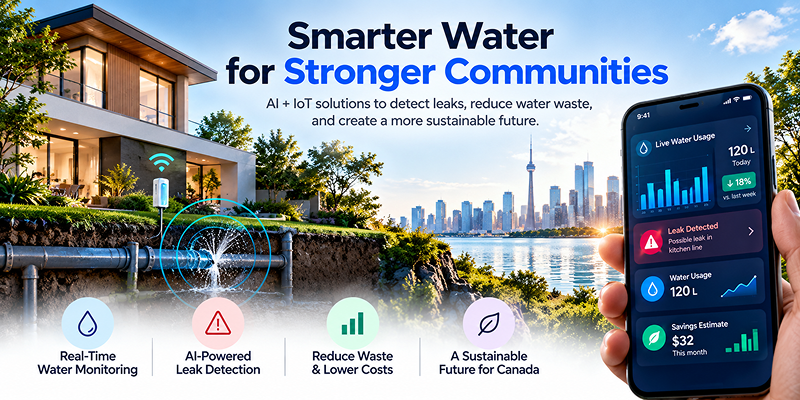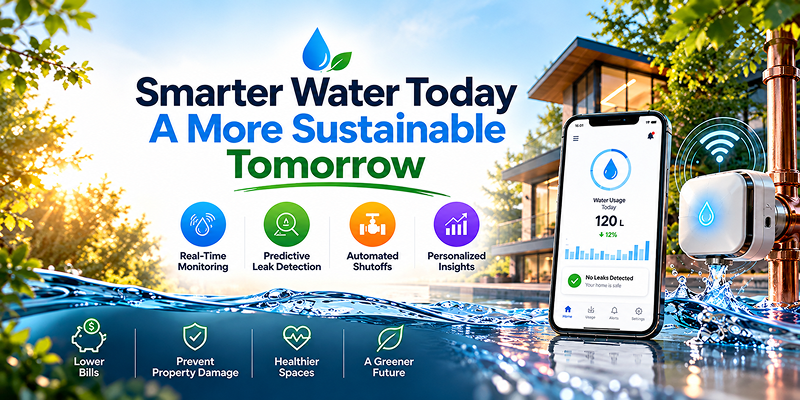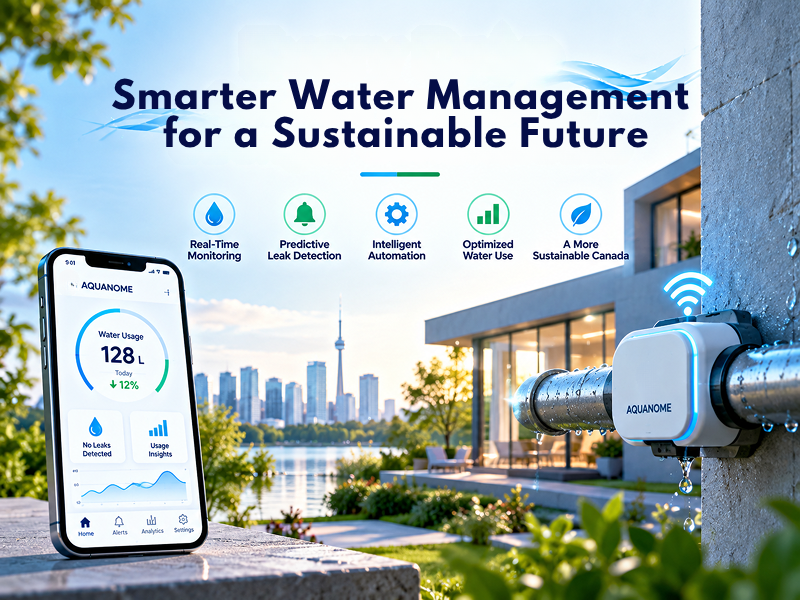

 Save up to 30% on Water Bills
 Smart IoT Water Management
 Real-Time Monitoring & Alerts
 Prevent Costly Leak Damage
How AI and IoT Are Transforming Smart Water Management


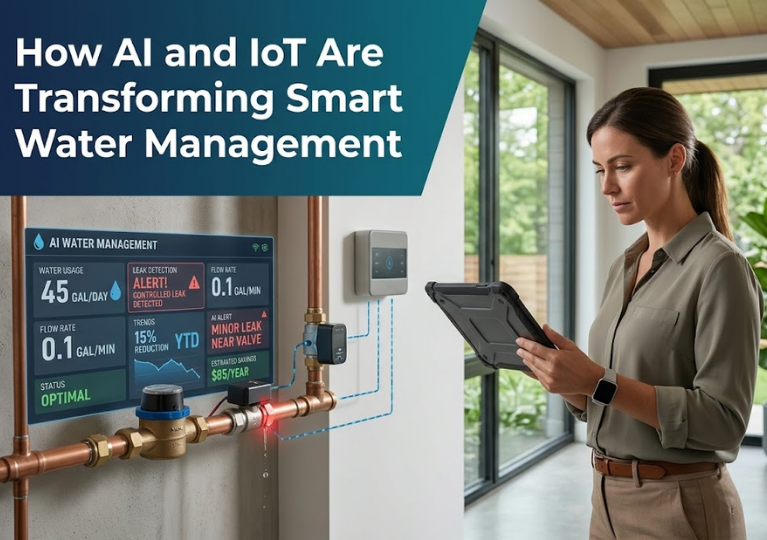
Water is one of the most valuable resources, yet homes and businesses can lose significant amounts of water through unnoticed leaks, inefficient usage, and outdated monitoring systems. These losses can increase water bills, cause property damage, and create unnecessary environmental pressure. AI and IoT-powered water management are changing how properties monitor and control water use by providing real-time insights, intelligent alerts, and predictive leak detection.
Why Smart Water Management Matters
Traditional water systems often provide limited information about daily consumption or unexpected changes in water flow. A small leak can continue for days or weeks before anyone notices it.
Smart water monitoring systems use connected sensors to continuously track water flow and usage, helping identify unusual patterns much earlier.
How IoT Helps Monitor Water Usage
IoT sensors can collect real-time information from water pipes, meters, and connected devices. This data can be sent to a centralized platform where homeowners and businesses can monitor their water consumption.
Users can gain visibility into water usage, flow rates, consumption trends, and system status without relying only on manual meter checks.
AI-Powered Leak Detection
One of the most valuable applications of AI in water management is leak detection.
AI can analyze water-flow patterns and identify unusual activity that may indicate a leak. Instead of waiting for visible water damage, users can receive an alert when the system detects a potential problem.
Early detection can help reduce water loss and minimize the risk of costly property damage.
Predictive Water Management
AI can go beyond detecting existing problems. By analyzing historical water usage and system behavior, intelligent platforms can identify patterns and provide predictive insights.
This can help users understand unusual consumption, identify potential issues, and make better decisions about water management.
Reducing Water Costs
Unnecessary water consumption can increase monthly utility costs for both homeowners and businesses.
Real-time monitoring helps users understand where water is being consumed and identify unusual usage patterns.
By detecting leaks early and improving awareness of consumption, smart water technology can help reduce avoidable water waste and potentially lower water-related expenses.
Preventing Water Damage
A small leak can eventually cause significant damage if it remains undetected.
Smart sensors can provide early warnings when unusual water activity is identified, giving property owners an opportunity to investigate the issue before it becomes a larger problem.
This proactive approach can help protect buildings, equipment, and valuable property.
Smart Water Management for Businesses
Commercial properties can have much more complex water systems than individual homes.
Restaurants, offices, hotels, industrial facilities, and other businesses may have multiple water-consuming areas that are difficult to monitor manually.
A centralized AI and IoT water management platform can provide businesses with better visibility across their properties and help identify unusual usage or potential leaks.
Supporting Sustainable Water Use
Water conservation is not only about reducing costs. Efficient water management also supports environmental sustainability.
Reducing unnecessary water loss means making better use of an essential natural resource. Smart monitoring can encourage more responsible consumption by giving users clear information about how water is being used.
How Aquanome Supports Smart Water Management
Aquanome combines AI, IoT, and real-time monitoring to help homes and businesses manage water more intelligently.
Its platform is designed to provide real-time water insights, predictive leak detection, intelligent automation, and water-use optimization.
By connecting water infrastructure with smart technology, Aquanome helps transform traditional water management into a more proactive and data-driven process.
The Future of Connected Water Technology
The future of water management is becoming increasingly connected. IoT sensors, AI analytics, automated alerts, and real-time dashboards can work together to create smarter water systems.
Instead of discovering leaks after damage occurs or reviewing water consumption only after receiving a bill, users can continuously monitor their systems and respond to potential issues earlier.
Conclusion
AI and IoT are transforming water management by making it more intelligent, connected, and proactive.
Real-time monitoring can improve visibility into water usage, while AI-powered analytics can help detect unusual patterns and potential leaks before they become costly problems.
For homes and businesses, smart water technology can help reduce waste, control costs, protect property, and support more sustainable water consumption.
Aquanome is helping build this smarter future by connecting AI, IoT, and water infrastructure to make every drop count.